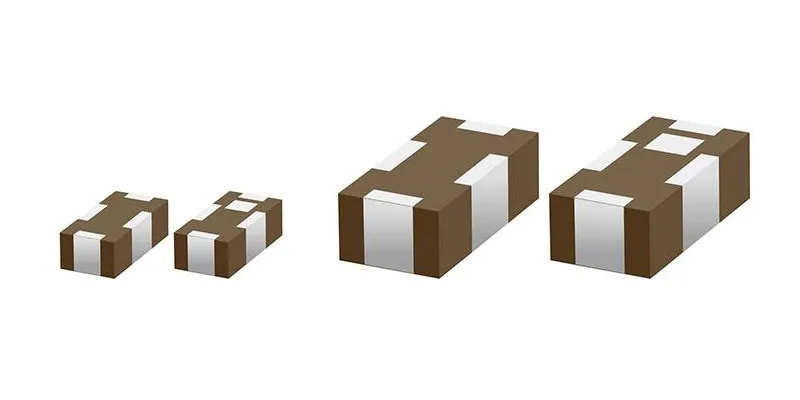
A filter is a low-pass filtering circuit composed of inductors and capacitors, which allows the current of useful signals to pass through and has significant attenuation for high-frequency interference signals. Due to the fact that there are two types of interference signals, differential mode and common mode, filters need to have attenuation effects on both types of interference. There are three basic principles:
A) The use of capacitors through the high-frequency isolation of low-frequency characteristics of the fire line, zero line high-frequency interference current into the ground (common mode), or the fire line high-frequency interference current into the zero line (differential mode);
B) Utilizing the impedance characteristics of the inductive coil to reflect the high frequency interference current back to the interference source;
C) The characteristic of using interference suppression ferrite to absorb and convert interference signals in a certain frequency band into heat is that suitable interference suppression ferrite magnetic rings and beads can be directly placed on the cable that needs to be filtered for a certain interference signal frequency band
The Importance of High Frequency Insertion Loss in Power Filters
Although various electromagnetic compatibility standards only limit conducted emissions to 30MHz (old military standards to 50MHz, new military standards to 10MHz), the suppression of conducted emissions must not ignore the influence of high frequencies. Because high-frequency conduction current on power lines can cause radiation, resulting in excessive radiation emission from equipment. In addition, the test waveform in transient pulse sensitivity testing often contains high frequency components. If these high-frequency interferences are not filtered out, it can also lead to the failure of the sensitivity test of the equipment.
There are two main reasons for the poor high-frequency characteristics of power line filters: one is the spatial coupling caused by internal parasitic parameters, and the other is the imperfection of the filtering devices. Therefore, methods to improve high-frequency characteristics also start from these two aspects.
Internal structure: The wiring of the filter should be arranged in one direction according to the circuit structure. Under the condition of space allowance, a certain distance should be maintained between the inductor and capacitor. If necessary, some isolation plates can be set up to reduce spatial coupling.
Inductance: Control the parasitic capacitance of the inductance according to the method introduced earlier. If necessary, use multiple inductors in series.
Differential mode filtering capacitor: The lead of the capacitor should be as short as possible. To understand the meaning of this requirement: the connection between the capacitor and the wires (live and neutral) that need to be filtered should be as short as possible. If the filter is installed on the circuit board, the wiring on the circuit board will also be equivalent to the leads of the capacitor. At this point, it is important to ensure that the capacitor lead at the right time is the shortest.
Common mode capacitor: The leads of the capacitor should be as short as possible. The understanding and precautions for this requirement are the same as those for differential mode capacitors. However, the common mode high-frequency filtering characteristics of the filter are mainly guaranteed by the common mode capacitor, and the frequency of common mode interference is generally high, so the high-frequency characteristics of the common mode filtering capacitor are more important. The use of three terminal capacitors can significantly improve the high-frequency filtering effect. However, it is important to pay attention to the correct use of three terminal capacitors. That is to say, the grounding wire should be kept as short as possible, while the length of the other two wires has almost no impact on the effect. If necessary, a through-hole capacitor can be used, and the performance of the filter itself can be maintained above 1GHz.
Special reminder: When the radiation emission of the device does not meet the standard requirements at a certain frequency, do not forget to check the common mode conduction emission of the power cord at this frequency. Radiation emission is likely caused by this common mode emission current.