In the fields of electronics, communications, industrial control, and power supplies, there is an unassuming yet absolutely indispensable core component—the filter.
Although it lacks the high visibility of chips, screens, or batteries, it quietly ensures the stable operation of all kinds of electronic devices. From cell phones, Bluetooth headphones, and household outlets to industrial machine tools, communication base stations, and precision medical equipment—filters can be found in nearly every precision electronic device that runs on electricity.
I.The Core Essence of Filters
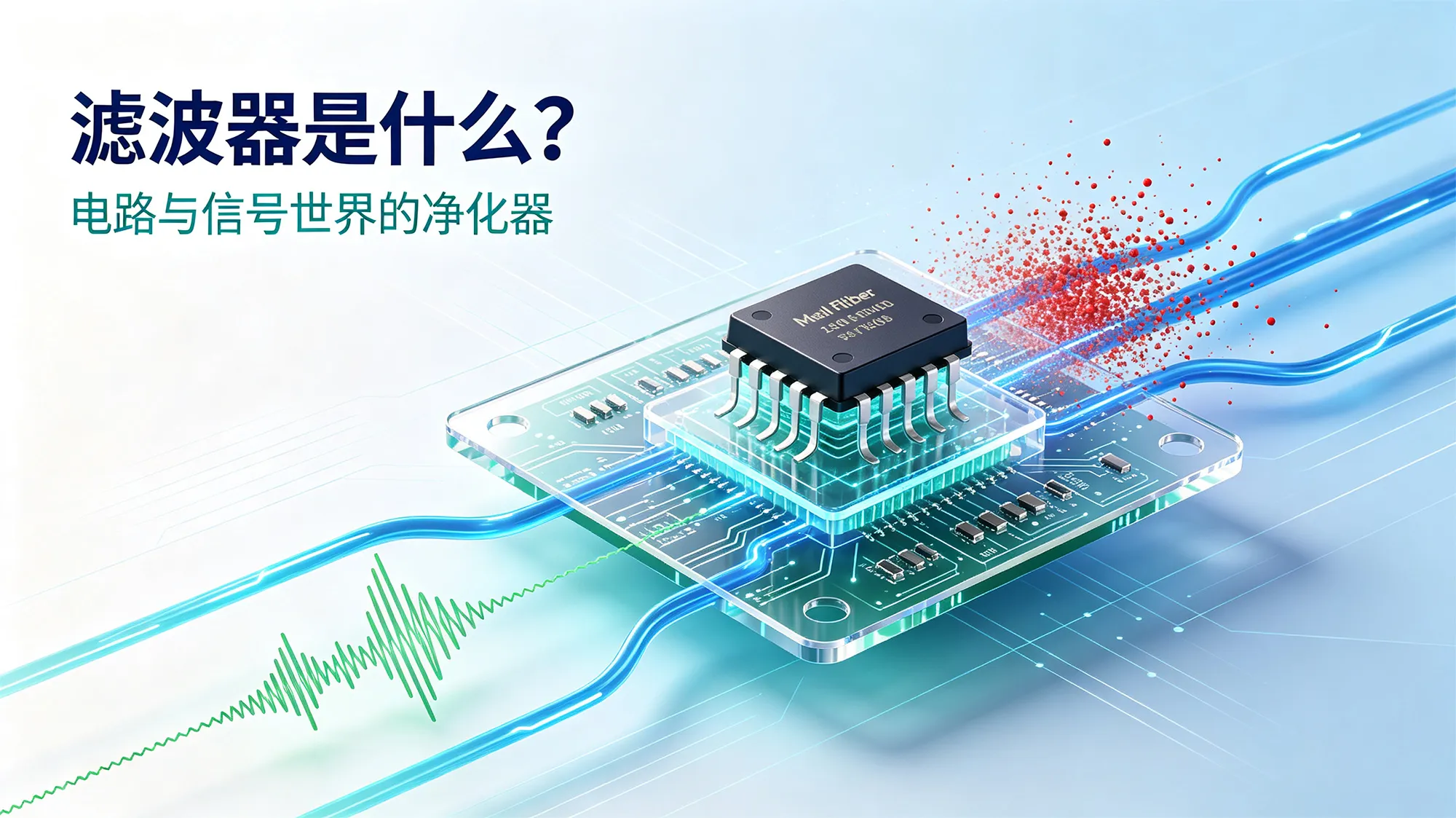
As the name implies, the core function of a filter can be summed up in two words: filtering.
As we all know, water purifiers and air purifiers filter out impurities and pollutants from water and air; filters, on the other hand, are the “purifiers” specifically designed for the world of circuits and signals.
A filter is like a “purifier” in the world of electronics.
Current in circuits and signals during transmission are never absolutely pure; they are always mixed with various unwanted impurities, such as interference waves, noise, harmonics, and high-frequency glitches.
The core function of a filter is to precisely select useful signals, thoroughly eliminate interference and noise, and organize chaotic currents and signals to deliver clean, stable, and effective signals to the equipment, ensuring its normal operation.
II.The 4 Key Functions of Filters
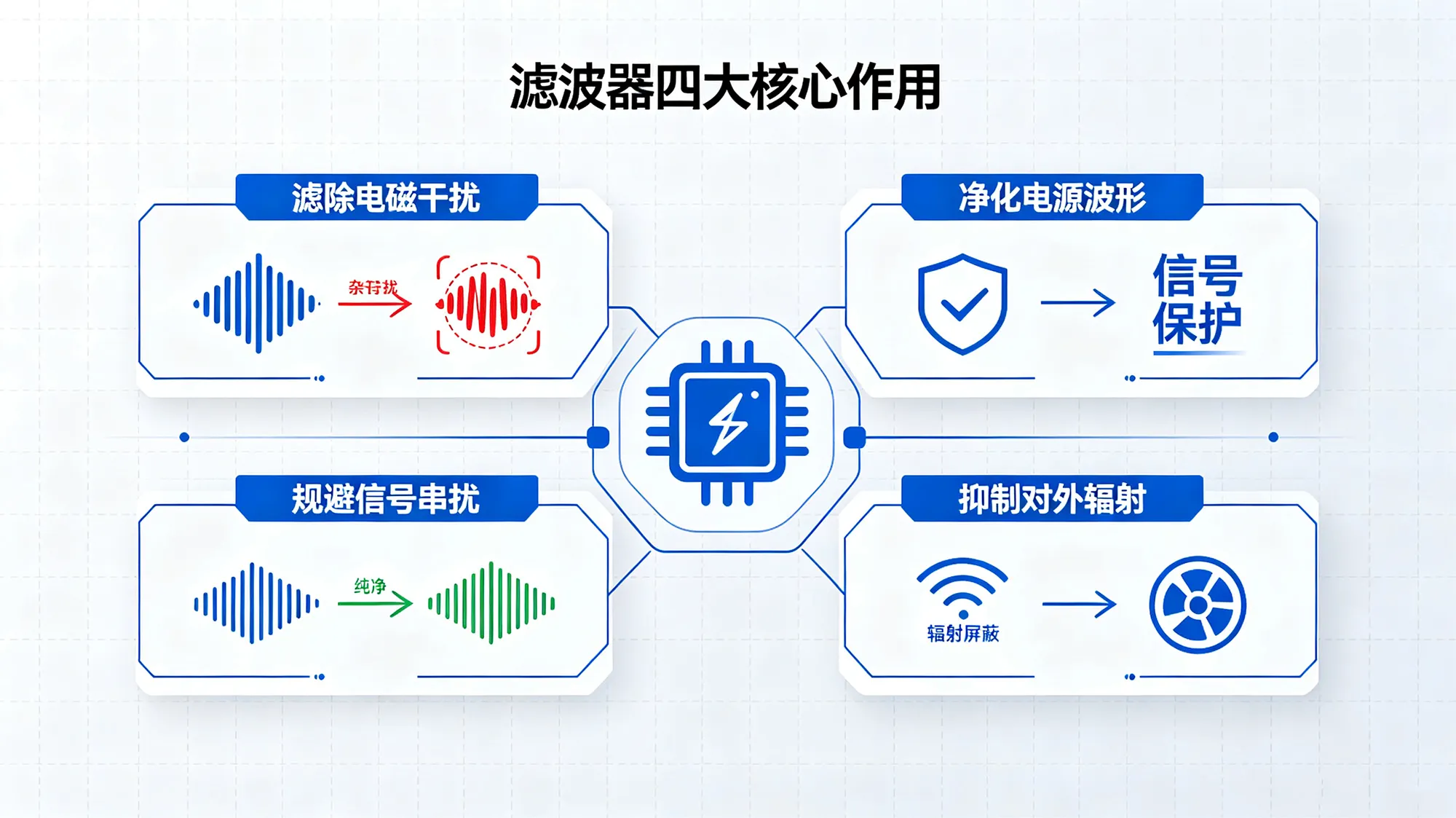
All of the filter's functions revolve around four core aspects: noise reduction, stability maintenance, equipment protection, and accuracy enhancement, covering the vast majority of consumer and industrial applications.
1. Filter out electromagnetic interference to resolve equipment noise and jitter issues
This is the most basic and most common function of a filter.
During everyday electricity use and signal transmission, the starting and stopping of electrical appliances, the operation of motors, and the switching of circuits all generate significant electromagnetic interference (EMI). These high-frequency disturbances are ubiquitous and can easily penetrate the interior of equipment.
If this interference enters the equipment directly, it can cause various minor malfunctions:
- Electrical hum and crackling noises in speakers and headphones
- The display flickers, has a distorted image, or shakes
- Sensor data fluctuations and inaccurate readings
- Industrial control equipment crashes or restarts for no apparent reason
The filter can precisely block out this type of unwanted interference, retaining only the pure operating signal, thereby eliminating at the source common issues such as equipment noise, image flickering, data corruption, and unexplained system crashes.
2. Clean up the power supply waveform and protect precision electronic components
The alternating current from the power grid that we use every day may seem stable and free of fluctuations, but it actually harbors many hidden safety hazards.
Frequent issues such as momentary voltage fluctuations, spike pulses, and harmonic distortion have a negligible impact on ordinary household appliances, but can directly damage high-precision components such as chips, precision circuit boards, medical diagnostic equipment, and industrial instruments.
When exposed to cluttered circuit environments over long periods, electronic components age more rapidly and generate heat; in severe cases, they may break down, short-circuit, or burn out, significantly shortening the equipment’s service life and increasing operating and maintenance costs.
Filters effectively smooth out voltage waveforms, absorb spike pulses, and suppress power grid harmonics, creating a clean and stable power supply environment for precision equipment. Acting as a dedicated “protective shield,” they significantly reduce the likelihood of equipment failure.
3. Prevent signal crosstalk to ensure accurate and stable communication and transmission
In signal transmission scenarios such as Bluetooth, Wi-Fi, radio frequency, and wireless remote control, electromagnetic interference is the most significant issue.
Electromagnetic waves from various nearby devices can easily interfere with target signals, causing signal crosstalk, distortion, and attenuation. This is also the primary reason why cell phones may lag even when showing full signal strength, Bluetooth headsets frequently disconnect, and remote controls fail to function properly.
Filters can precisely distinguish between “useful signals” and “unwanted interference” based on frequency-selective rules:
- Preserve valid signals in the target frequency band to improve transmission accuracy
- Block interference signals in unused frequency bands to prevent signal crosstalk
Simply put, it ensures that signal transmission does not cross-channel, drift, or become distorted, thereby comprehensively guaranteeing the stability and accuracy of communications, data acquisition, and wireless remote control.
4. Minimize external radiation from the equipment to ensure compliance with electromagnetic standards
Electromagnetic interference is bidirectional: external interference can affect the equipment itself, and electromagnetic noise generated by the equipment during operation can also radiate outward and interfere with nearby devices.
When industrial variable-frequency drives, high-power power supplies, motors, and other equipment are in operation, they generate high-intensity electromagnetic radiation, which can easily interfere with the normal operation of nearby sensors, precision instruments, and communication equipment.
Filters can effectively suppress the equipment's own electromagnetic radiation and conducted interference, providing two-way protection that ensures "no interference from others and no interference to others."
This is also the key reason why all electronic, industrial control, and new energy devices must be equipped with filters in order to pass electromagnetic compatibility testing and be marketed in compliance with regulations.
III.Common Types of Filters: Quickly Distinguish Their Different Uses
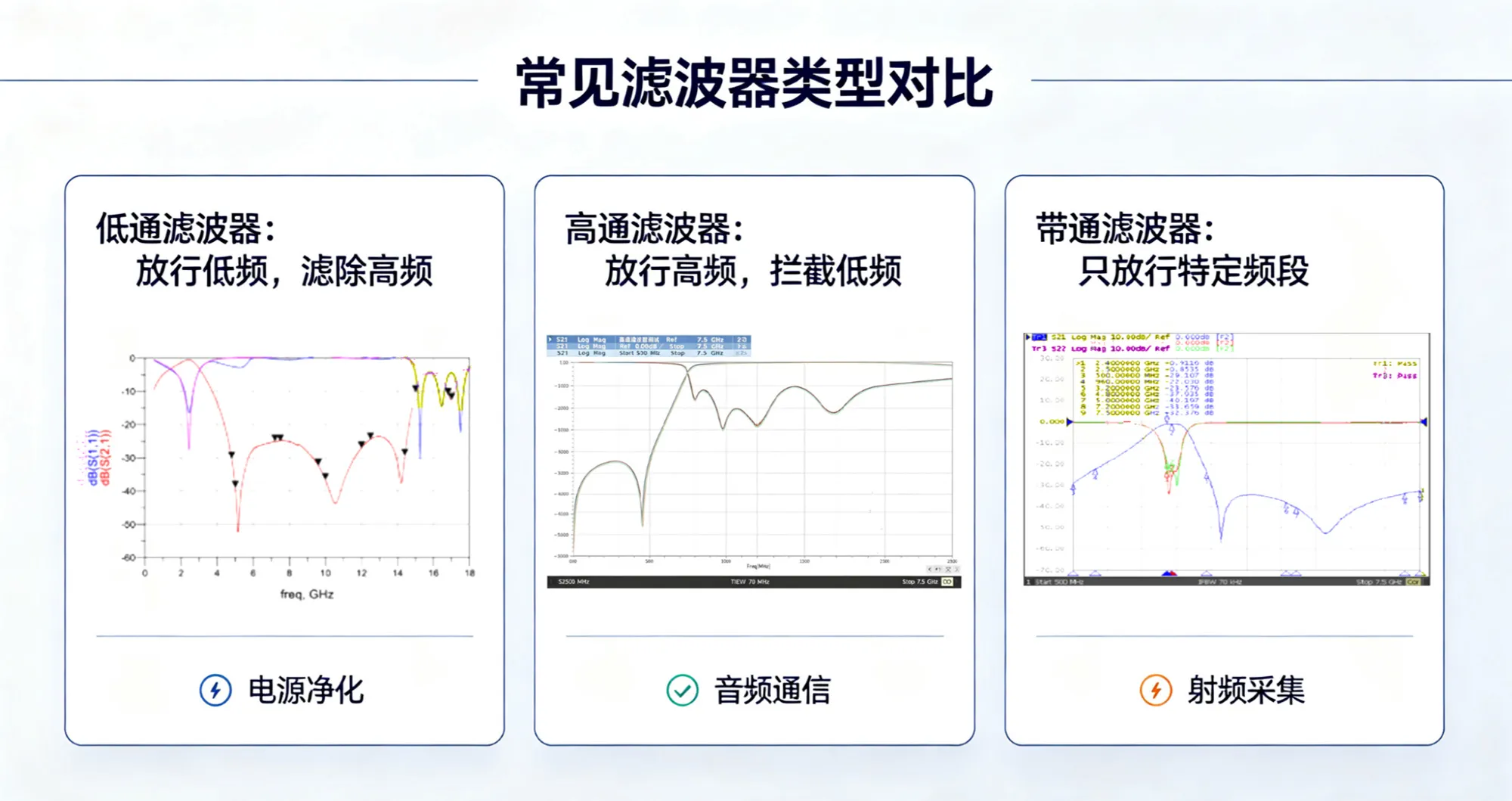
Based on their filtering frequencies, common filters are generally divided into three categories, each suited for different applications:
1. Low-pass filter
Key Features: Passes low-frequency signals and filters out high-frequency interference. It is the go-to choice for power supplies, home appliances, and industrial control equipment, focusing on power purification and the elimination of high-frequency noise.
2. High-pass filter
Key Features: Passes high-frequency signals and blocks low-frequency interference. Widely used in communications and audio equipment to ensure the clean transmission of high-frequency signals.
3. Bandpass Filter
Key Features: Allows only signals within a specific frequency band to pass through, while filtering out all high- and low-frequency interference. It offers the highest filtering accuracy and is commonly used in high-end applications such as RF communications and precision signal acquisition.
IV.Everyday Applications of Filters
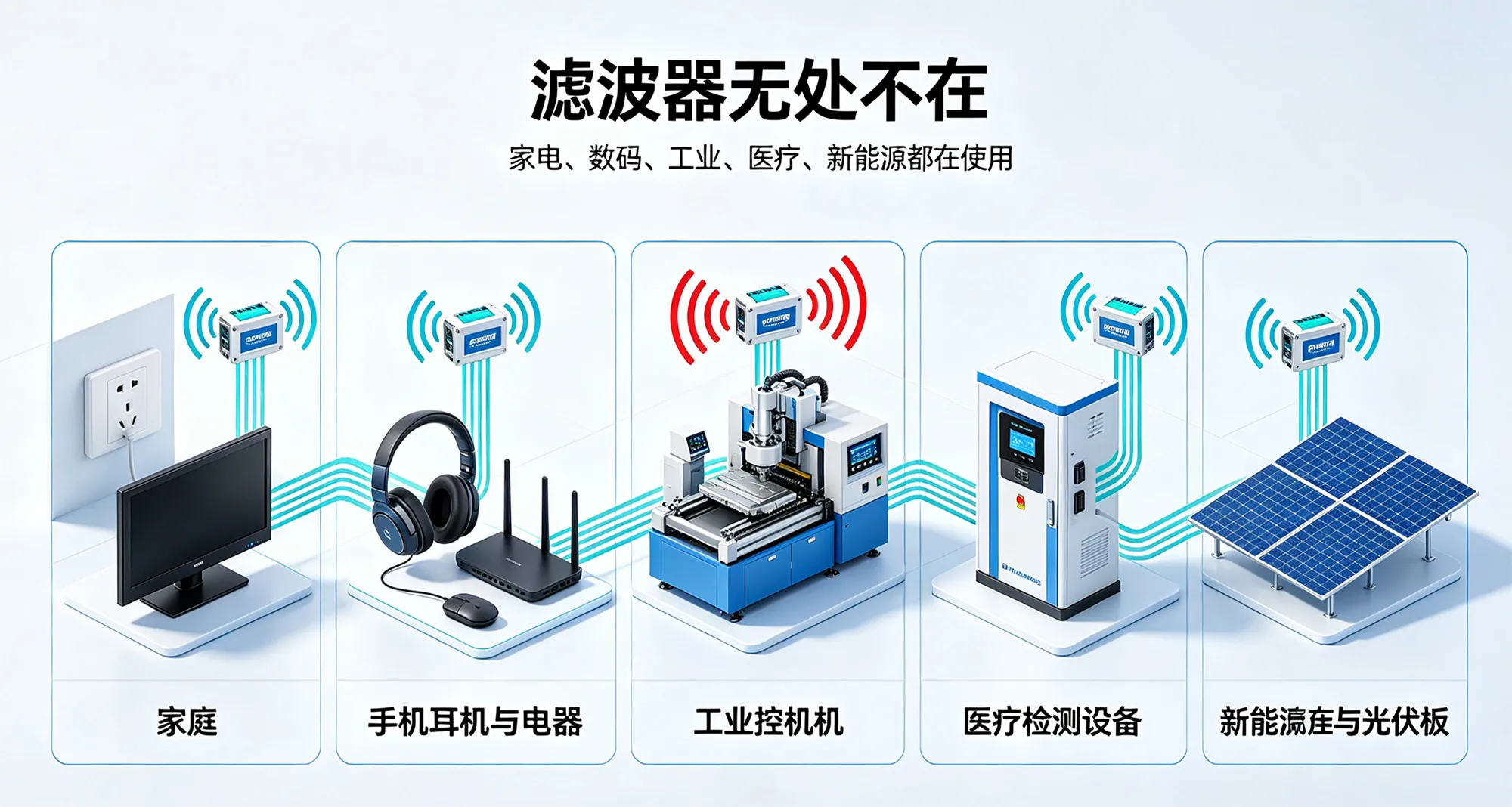
Although filters may seem like a niche technology, they have long been fully integrated into every aspect of daily life and industry:
- Home Settings: Power strip with a filter, TV, stereo, and air conditioner—eliminates electrical noise and ensures the stable operation of home appliances
- Digital Scenarios: Cell phones, headphones, routers—clean up the signal to prevent disconnections, lag, and static.
- Industrial Settings: Variable-frequency drives, machine tools, and PLC industrial control equipment—provide interference resistance and crash protection to ensure stable production line operation
- Healthcare Settings: ECG machines, imaging equipment—filter out noise to ensure accurate and error-free test data
- New Energy Scenarios: Charging stations, photovoltaic equipment—suppress harmonics and ensure circuit safety
Five,Summary: Why Are Filters Essential?
If we compare circuits and signal transmission systems to public roads, interference and noise are like pebbles, debris, and obstacles that block traffic.
Filters, on the other hand, serve as both the “cleaners” and the “safety barriers” of this system:
✅ Clear away any obstructions to ensure smooth transmission of signals and electrical current
✅ Block out external interference and ensure stable device operation
✅ Purify the circuit environment and extend the service life of the equipment
Though tiny and seemingly unremarkable, they are essential to ensuring the stable operation, data accuracy, and safety and durability of all kinds of electronic devices.